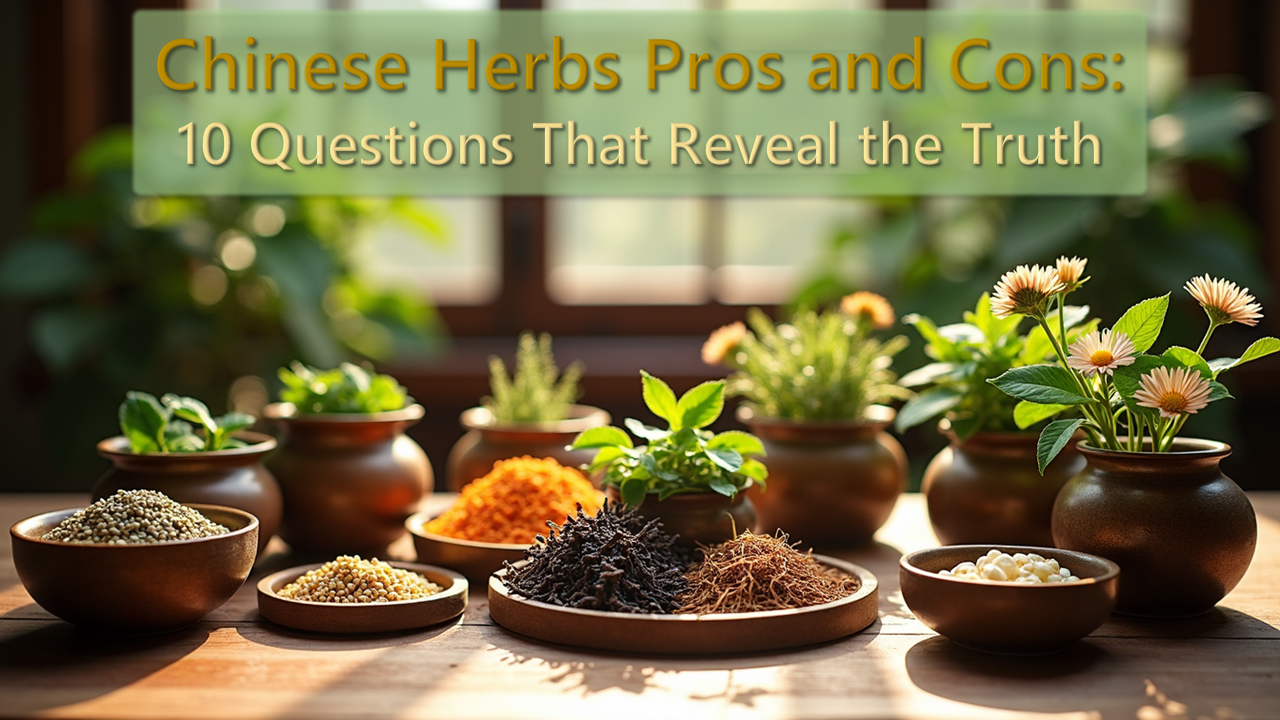
Chinese Herbs Pros and Cons: 10 Questions That Reveal the Truth
You don’t trust Chinese herbs.
That makes sense.
You’ve seen bold claims before.
You’ve heard stories that felt too good.
So instead of telling you what to think, let’s try something different.
Let’s walk through 10 simple questions.
You answer them in your head.
No pressure.
No debate.
Just your own logic doing the work.
The Skeptic I’m Talking To
Picture one person.
They trust modern medicine.
They believe in science and data.
They think herbal remedies are:
- Unproven
- Unsafe
- Poorly regulated
- Driven by hype.
They’ve seen bad supplements before.
They don’t want to waste money or risk harm.
That’s who this is for.
Question 1: What do you trust most when it comes to health?
Do you trust systems that have been evaluated over time?
Or only things assessed in recent clinical trials?
Because many modern drugs are new.
Some herbs have been used for thousands of years.
If something worked for generations, does that count at all?
Question 2: Have you ever used something “natural” that worked?
Think about simple things.
- Ginger for nausea
- Turmeric for inflammation
- Chamomile for sleep
- Astragalus for energy
Did any of those help you?
If yes, why did they work?
Question 3: If some herbs clearly work, why assume all herbs don’t?
It’s easy to lump everything together.
But that’s like saying all medicines are useless because one failed.
Would you judge all antibiotics based on one bad reaction?
Then why treat herbs that way?
Question 4: What is the real difference between a drug and an herb?
Many drugs come from plants.
A company isolates one compound.
They assess it.
They sell it.
An herb often contains many compounds working together.
So, the question is simple.
Is the difference about effectiveness… or just how it’s packaged?
Question 5: Could “lack of evidence” sometimes mean “lack of funding”?
Clinical trials cost millions.
Big companies fund studies when they can patent the result.
You can’t patent most herbs.
So, who pays for large trials?
If no one funds the research, does that prove something doesn’t work?
Question 6: What are the real risks you are worried about?
Let’s name them clearly.
- Side effects
- Contamination
- Wrong dosage
- Interactions with drugs
Those are real concerns.
But now I ask this.
Do these risks exist only with herbs?
Or do they also exist with prescription drugs?
Maybe your diet is involved.
Question 7: Have you ever experienced side effects from modern medicine?
Think about it.
A drug made you tired.
Or upset your stomach.
Every treatment has trade-offs.
So, the real question becomes:
Are you comparing herbs to a perfect system… or to reality?
Question 8: What happens when modern medicine doesn’t solve the problem?
Chronic issues often stay.
- Low energy
- Digestive problems
- Mild anxiety
Doctors may say, “You’re fine.”
But you don’t feel fine.
If one system doesn’t fully help, does it make sense to explore another?
Question 9: What would “responsible use” of Chinese herbs look like?
Not blind trust.
Not random pills from the internet.
Something smarter.
- Working with a trained practitioner
- Using tested, high-quality products
- Checking for drug interactions
- Starting with small doses
If herbs were used this way, would your concern drop?
Question 10: If the downside is limited and the upside is possible, what’s the rational move?
Let’s break it down.
If herbs help, you gain relief.
If they don’t, you stop using them.
If used carefully, the risk stays low.
So, the real question is this:
Is avoiding them completely the safest choice… or just the most familiar one?
What You Just Did (Without Noticing)
You didn’t get told what to believe.
You walked through your own reasoning.
You looked at:
- Evidence vs. lack of funding
- Real risks vs. assumed risks.
- Personal experience vs. general claims
And you asked one key thing.
Is the issue that herbs don’t work… or that you never gave them a fair frame?
The Pros and Cons — Now Seen Clearly
Let’s keep it simple-Chinese herbal medicine.
Real Pros
- Long history of use (millennia)
- Some clear, everyday benefits
- Rare side effects
- Can support and resolve chronic conditions.
Real Cons
- Quality varies a lot.
- Not all claims are true.
- Requires seasoned guidance to use safely.
- Less large-scale research
Neither side is perfect.
But now you’re not guessing.
A Simple Way to Think About It
You don’t have to choose sides.
You don’t have to reject modern medicine.
You also don’t have to ignore other options.
You can do something smarter.
Consult Grandmaster Chinese herbalists (30+ years’ experience).
Consult seasoned MDs, who are open-minded.
Use what works.
Ignore what doesn’t.
Final Thought (And Your Next Step)
You started this skeptical.
That’s a good thing.
But now you’ve asked better questions.
So, here’s your next move.
Don’t believe everything about Chinese herbs.
But don’t dismiss everything either.
Pick one small, low-risk example.
Test it carefully.
Pay attention to what happens.
Because the strongest belief you can have…
Is one built from your own experience.
Mark Hammer, Senior Herbalist, Longevity Mountain Herbs